By Xuky & Riet · Published 16 April 2026 · Updated 25 August 2026
How Do You Play Padel?
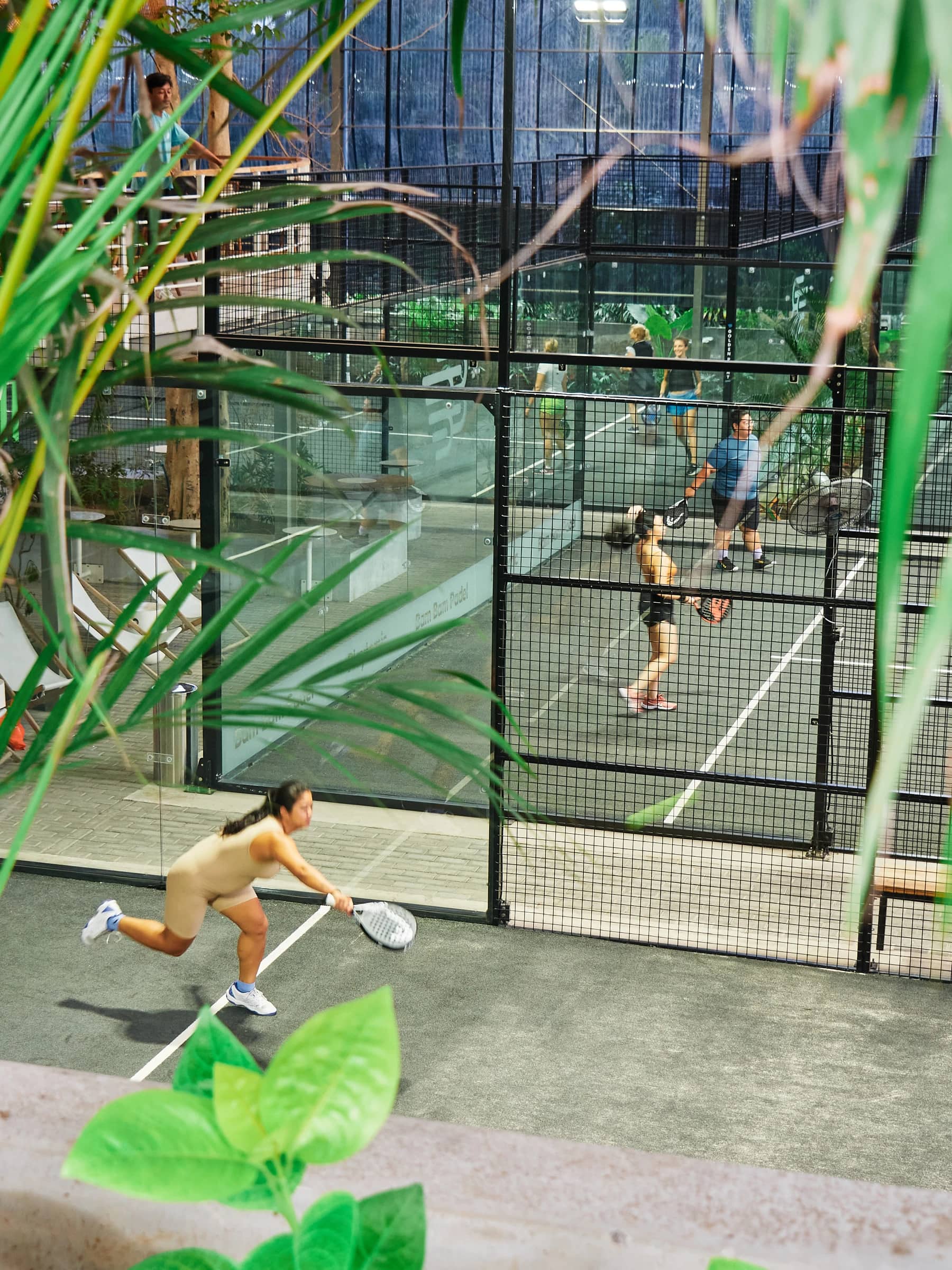
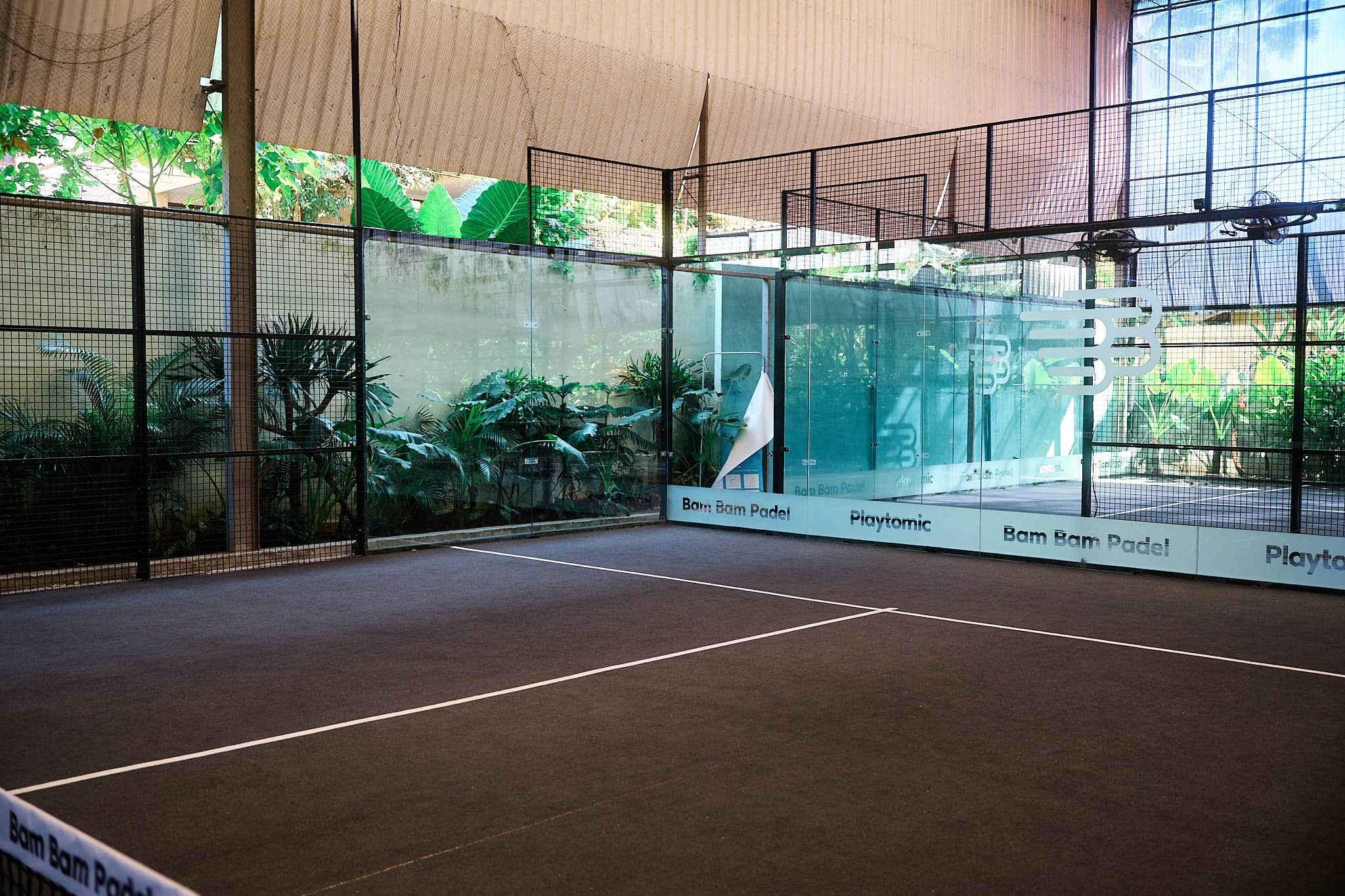
You play padel in doubles, on an enclosed court, with an underarm serve and tennis scoring, and the walls are in play. That is the whole sport in one sentence. Four people, two on each side, hitting a low-pressure ball back and forth until someone can't return it. The ball can bounce off the glass and still be live, which is the part that surprises people and the part that makes it fun.
The court is a bit under a third the size of a tennis court, so nobody is running marathons. The racket is solid, with holes drilled through it, and no strings. And the serve goes underarm, below your waist, which means the serve is not a weapon you have to learn before you can play a point.
That last detail is why beginners can actually rally on day one. In tennis, if you can't serve, you can't start. In padel, everyone can start.
Padel Rules for Beginners, in About Ninety Seconds
There are more rules than this, and the FIP rulebook has all of them. But these are the ones you need before your first game, and you will pick the rest up by getting them wrong in a friendly way.
- Serve underarm, below the waist, diagonally, from behind the service line. You get two attempts, same as tennis.
- The serve must bounce before it hits the back glass. If it hits the glass on the full, it's a fault.
- After the serve, the ball can come off any wall and still be in play, as long as it bounced on the court first.
- You cannot hit the ball into your own walls first. It has to go over the net before it touches anything on the other side.
- A ball that hits the metal fencing on your opponent's side without bouncing first is out.
- Volleys are allowed everywhere except on the return of serve, where the ball has to bounce.
How Padel Points and Scoring Work
Padel scoring is tennis scoring, borrowed wholesale. 15, 30, 40, game. Six games wins a set, and you need to be two clear. Most social matches are one set, sometimes two.
The one variation you'll meet is the golden point. At 40-40, instead of playing deuce and advantage until someone's dinner goes cold, you play a single deciding point. The receiving pair chooses which of them takes it. Plenty of clubs use it by default, and it does wonders for finishing a match on time.
If you have played any tennis, padel tennis rules will feel familiar within about four points. If you haven't, the scoring is genuinely the hardest part of the sport to learn, which tells you something about how easy the rest of it is.
The Glass Is the Bit Everyone Gets Wrong
Here's the catch. Every new player's instinct, when the ball flies past them towards the back wall, is to chase it and swing. Don't. Let it hit the glass, wait for it to come back to you, and hit it then.
The glass is not an obstacle. It's a teammate who never argues. A ball off the back wall comes back slower, sits higher, and gives you an extra second you did not have before. Beginners who learn this in their first session start winning points against people who have played for six months and still panic.
Nine times out of ten, if you lost a point at the back of the court, it wasn't because your backhand is bad. It was because you played the ball before the wall did the work for you.
Where You Stand Matters More Than Your Forehand
This is the opinion I will die on. Most beginners lose points because they were out of position before they hit the ball, not because the shot itself was bad. You can have a lovely forehand and still lose 6-1 if you're standing in the wrong half of the court.
Two things fix most of it. Move with your partner, side by side, like you're tied together at the hip with a two-metre rope. If one of you goes forward, the other goes forward. And take the net together when the ball is high and slow, not because you sprinted at it, but because the situation invited you.
Stop standing at the back while your partner is at the net. You are now playing doubles with roughly 40% less useful court coverage, and the other team can see it from across the glass.
What You Actually Need to Bring
Nothing, and I mean that. Rackets rent from 60,000 IDR at our pro-shop, and balls come with the court. Wear whatever you'd wear to a gym: shorts, a breathable top, and trainers with a flat grippy sole rather than a chunky running heel.
Don't buy a racket before your third session. I know shopping for gear is more fun than working on your footwork, but you have no idea yet whether you want something light and controlled or heavy and stupid. Rent two or three, find out, then spend money.
When You Should Not Book a Lesson
If you have never played and you're coming with three friends who also have never played, don't book a lesson. Book a court, rent four rackets, and spend an hour making an absolute mess of it. You'll learn the walls, you'll learn the scoring, and you'll have more fun than being fed 100 identical forehands.
Book a lesson when you've played three or four times and you can feel that something specific isn't working. That's when a coach is worth the money, because you can actually describe the problem. Our group and private lessons are there when you get to that point, and not a session before.
Playing Your First Game in Ubud
We have five covered courts in Mas, just south of central Ubud, open 7 AM to 10 PM every day except Nyepi. Covered matters here more than it sounds: the afternoon rain doesn't stop anything, and neither does the midday sun.
Courts go through Playtomic. Court and lesson prices are all on one page, including happy hour from ${rate.happyHourFrom} per player, which is the cheapest way to find out whether you like this sport. If you'd rather read what happens step by step before you commit, the beginner's guide walks through the whole first visit.
Come have a hit. Worst case, you spend an hour hitting a ball into glass and discover you'd rather do yoga.