By Xuky · Published 16 September 2026
You Can Learn One in an Afternoon. The Other Takes a Season.
Padel vs tennis, the short version: they're cousins, not siblings. Padel is played on a smaller, walled-in court, served underarm, doubles only. Tennis is played on a bigger, open court, served overhand, and happy to leave you out there on your own. Same scoring language, fifteen, thirty, deuce, completely different sport once the ball is actually moving.
Here's the part that actually matters if you're deciding which one to try. Hand someone a padel racket who has never played either sport and they'll be in a real rally inside the first session. Hand them a tennis racket cold and they'll spend that session apologising to the fence. That's not a knock on tennis, it's just what a smaller court, a bounce-first serve and a stringless racket do for a complete beginner.
Tennis's rules were written down in 1874. Padel wasn't invented until 1969, in a backyard in Acapulco, and it stayed a regional game in Latin America and Spain for decades before turning into a genuinely global sport only in the last fifteen years or so, mostly by removing everything that made tennis intimidating to start and keeping everything that made it fun to finish a point. Sacrilege to say out loud at a tennis club. True anyway.
The Court Is a Third Smaller, and the Walls Are Part of the Game
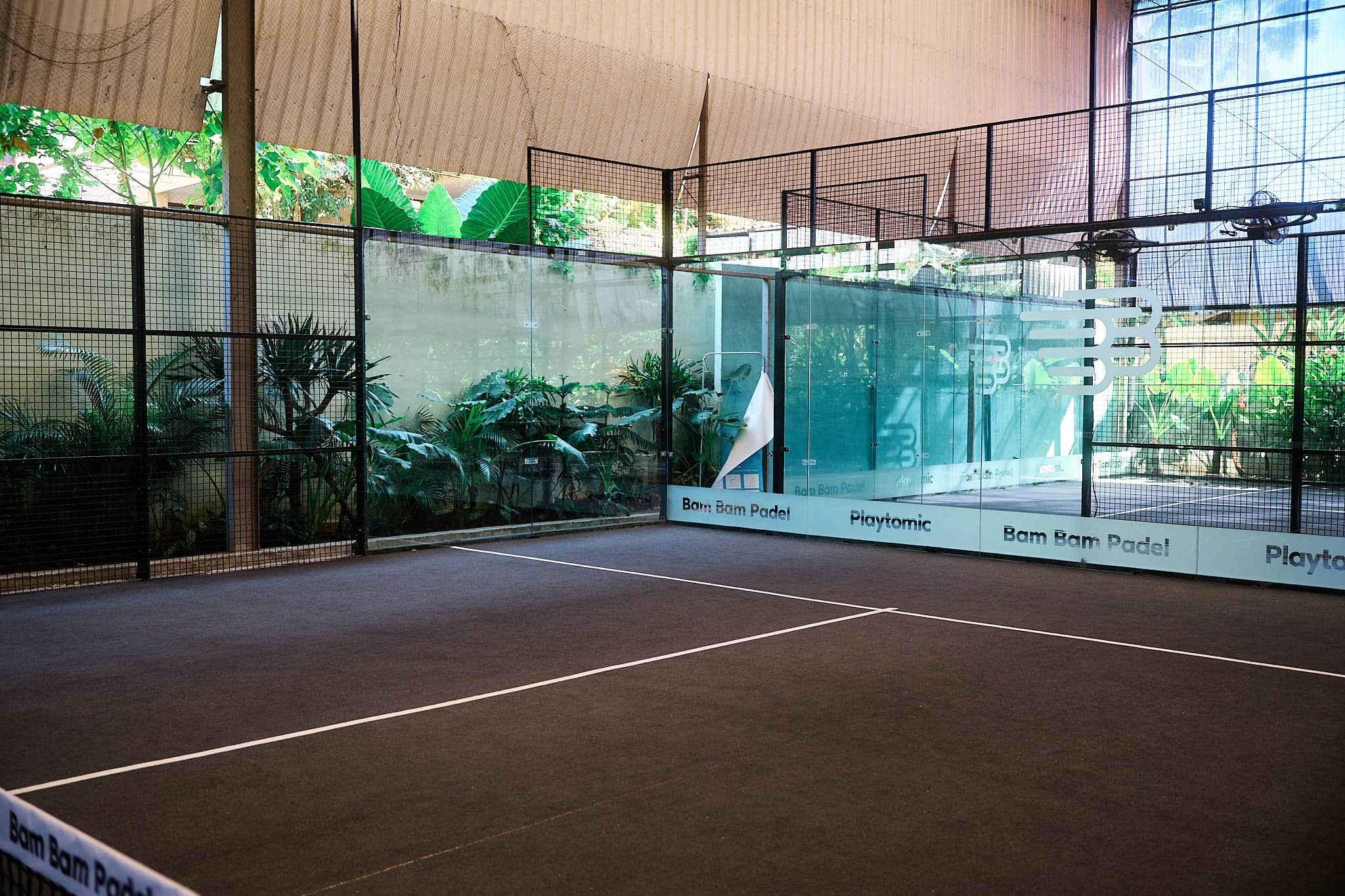
A tennis doubles court runs 23.77 by 10.97 metres, all open air, out of bounds the moment the ball leaves it. A padel court is 20 by 10 metres, glass and mesh on all four sides, and the ball staying in play after it bounces off a wall isn't a fluke, it's the rule the entire sport is built around.
That's the single biggest reason padel rallies run longer than tennis rallies on paper and feel less exhausting in practice. A tennis ball that clears the baseline is gone, point over, walk back to the service line. A padel ball that clears the baseline usually just bounces off the back glass and comes straight back at you, which turns a lot of what would be a tennis error into another shot.
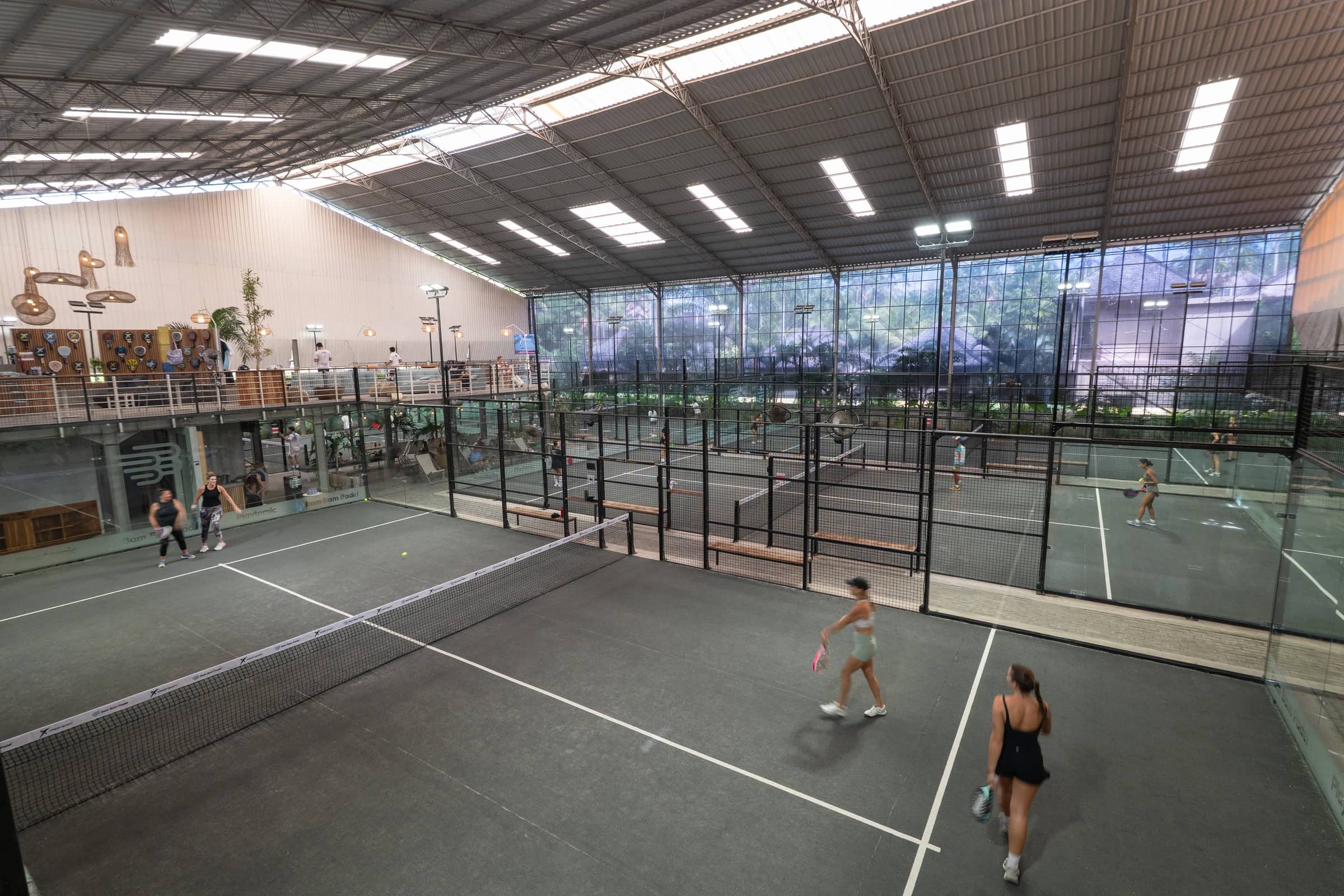
Ours are covered too, five courts under one roof, so the walls do their job whatever's happening with the weather outside. A tennis court in the rain is just an idea you had earlier in the day.
The Serve Has to Bounce First, and That Removes the Hardest Skill in Tennis
A tennis serve is hit before the ball touches the ground, overhand, from behind the baseline, and it's widely rated the hardest shot in the sport to learn well. A padel serve, under FIP rules, is the opposite on every count: underarm, hit at or below waist height, and only after you've bounced the ball on your own side first.
Take away the toss, the timing and the shoulder-height contact point, and you take away most of what makes a first tennis lesson intimidating. Nobody's opening rally gets cut short by a double fault into the net five times running. The serve in padel gets the ball started. In tennis it can end the point before either player has moved.
That difference shapes the whole point, not just the first shot. Tennis is built to let a big serve end things outright, an ace or a service winner, the point over before the returner has settled. Padel's underarm serve can barely do that, so even at professional level a clean ace is rare, and a point gets built instead: patient rallies, careful placement over raw pace, and using the walls to move your opponent out of position rather than blast a ball past them. Tennis can be a power game decided in four shots. Padel is usually a longer, more tactical conversation.
The Racket Weighs More Than You'd Guess and Has Nothing to Snap
A padel racket has no strings at all, a solid, perforated face instead, holes 9 to 13 millimetres across under FIP rules, capped at 45.5 centimetres long and 340 to 390 grams. A tennis racket runs longer, up to 73.7 centimetres under ITF rules, strung, and usually lighter, most sit closer to 300 grams once they're strung up.
So the racket that looks like a beach paddle is actually the heavier of the two, which surprises almost everyone the first time they pick one up. The solid, stringless face changes more than the specs, too. Strings flex and add their own power to a shot, which is part of why a fast, well-timed tennis stroke takes years to control. A padel racket does the opposite: it dampens the ball rather than launching it, so shots stay controlled even when you swing hard, and rallies can move quickly without the ball flying off the way it does on a strung racket in untrained hands.
We stock and rent both Bullpadel and Dropshot rackets at the club, a few price tiers depending on how seriously you're taking this, and you genuinely don't need to own one before your first game. Borrow one from the front desk, work out if you like the sport, buy later.
Tennis Lets You Play Alone. Padel Won't.
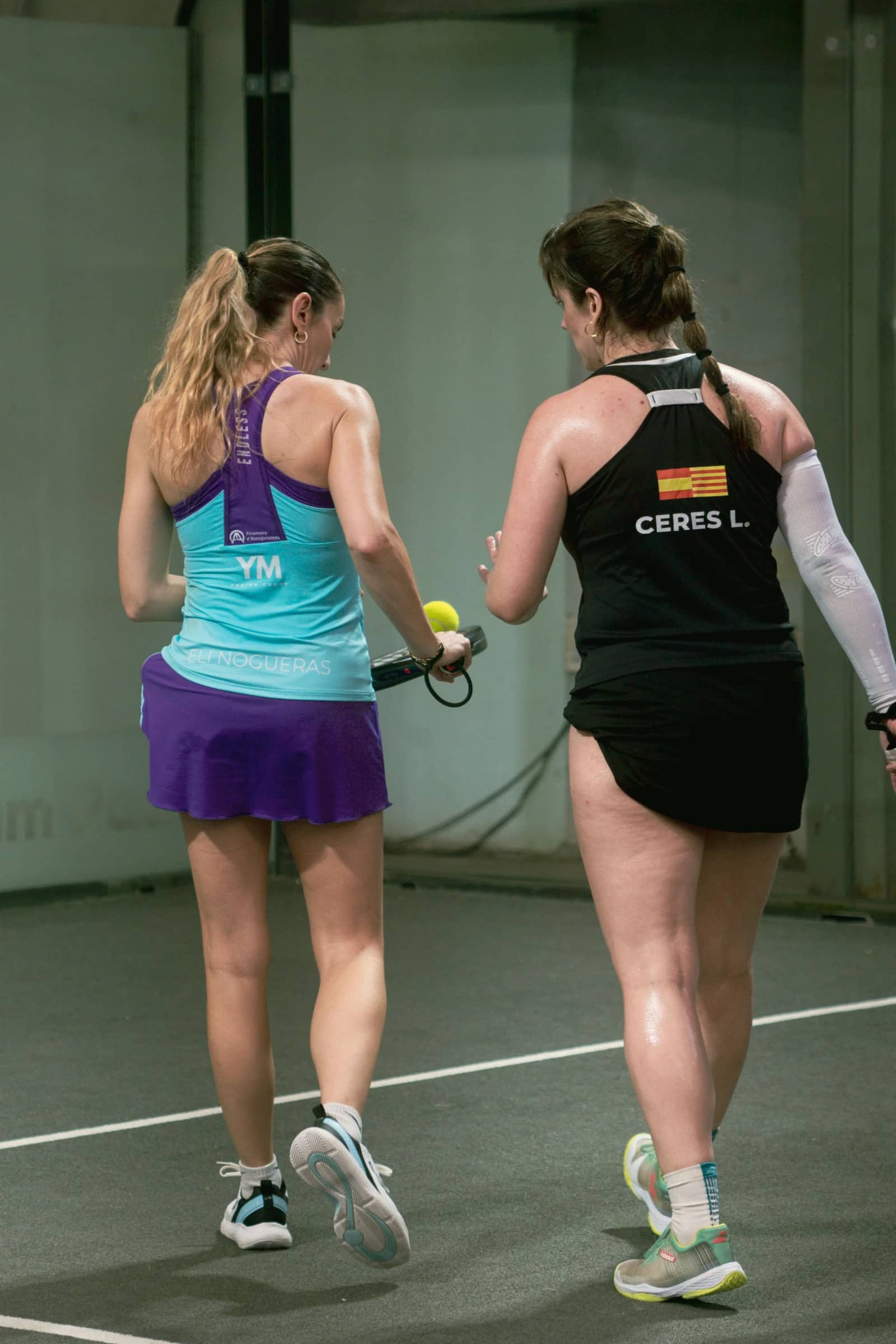
Tennis is singles or doubles, your call. Padel is doubles only, full stop, no singles format exists in the official rules. That's a design decision, not an oversight, the court is sized and the walls are placed for two against two, and it turns padel into a fundamentally social sport in a way tennis doesn't have to be.
That's most of why people who'd never call themselves "sporty" end up playing padel three times a week. You're never out there carrying a match by yourself, your partner is covering half the court and half the decisions, and losing badly is a shared problem instead of a personal one. Tennis can be exactly that social if you play doubles. Padel just doesn't give you the option not to be.
So, Is Padel Actually Easier Than Tennis?
Easier to start, yes, by a wide margin, for every reason already covered here: smaller court, forgiving serve, forgiving racket, faster route to an actual rally. Easier to get good at once you're past the beginner stage, not really. The tactical layer in padel, working the walls, reading angles off the glass, knowing when to lob instead of smash, is its own deep sport once you've been playing a year or two.
Here's the bit most comparison articles skip. Tennis players walking onto our courts for the first time assume their forehand is about to carry over. It mostly doesn't, the swing that generates power on an open court gets punished the moment there's a glass wall six metres behind you and no room to wind up. What actually transfers is the net game, tennis players who already volley well pick up padel's net play faster than complete beginners do. If you've played tennis for years, don't come in expecting your groundstrokes to save you. Come in expecting your hands at the net to.
When Tennis Still Wins
If you specifically want singles, tennis is the only one of the two that offers it, padel has no format for playing alone. If you want a serve that can end a point outright on raw pace, tennis's overhand serve has a much higher ceiling than anything the underarm padel serve allows. And if you're training solo fitness on court, covering 23.77 by 10.97 metres by yourself is a different session to sharing a 20 by 10 metre box with a partner.
I'm not going to pretend padel replaces tennis for everyone. If the parts of tennis you actually love are the serve and the singles format, padel isn't a substitute for that, it's a different sport that happens to share a scoreboard.
Trying Padel in Ubud When You've Only Ever Played Tennis
Book the 60-minute initiation class first if you've never picked up a padel racket, it's 200,000 IDR and covers the serve, the walls and enough positioning to survive your first real game without needing a babysitter. Rackets and balls are provided, so you don't need to own anything before you decide if you like it.
Court time on its own runs 110,000 IDR for 60 minutes across our five covered courts, and lessons with our coaches are there if it's old tennis habits that need unlearning rather than a whole new game taught from scratch. See the full price list for lesson rates and packages.
Bring your tennis serve if you must. We'll just ask you to leave it at the door with your shoes, and pick it back up on the way out.
Sources: Padel on Wikipedia, Rules of Padel, International Padel Federation (FIP), Rules of Tennis, International Tennis Federation (ITF)